Datacakes

Datacakes: AI SaaS onboarding cut from 9 steps to 2
How Deltacron redesigned Datacakes' AI SaaS onboarding, cutting the path to the first useful insight from 9 steps to 2.
How Deltacron redesigned Datacakes' AI SaaS onboarding, cutting the path to the first useful insight from 9 steps to 2.
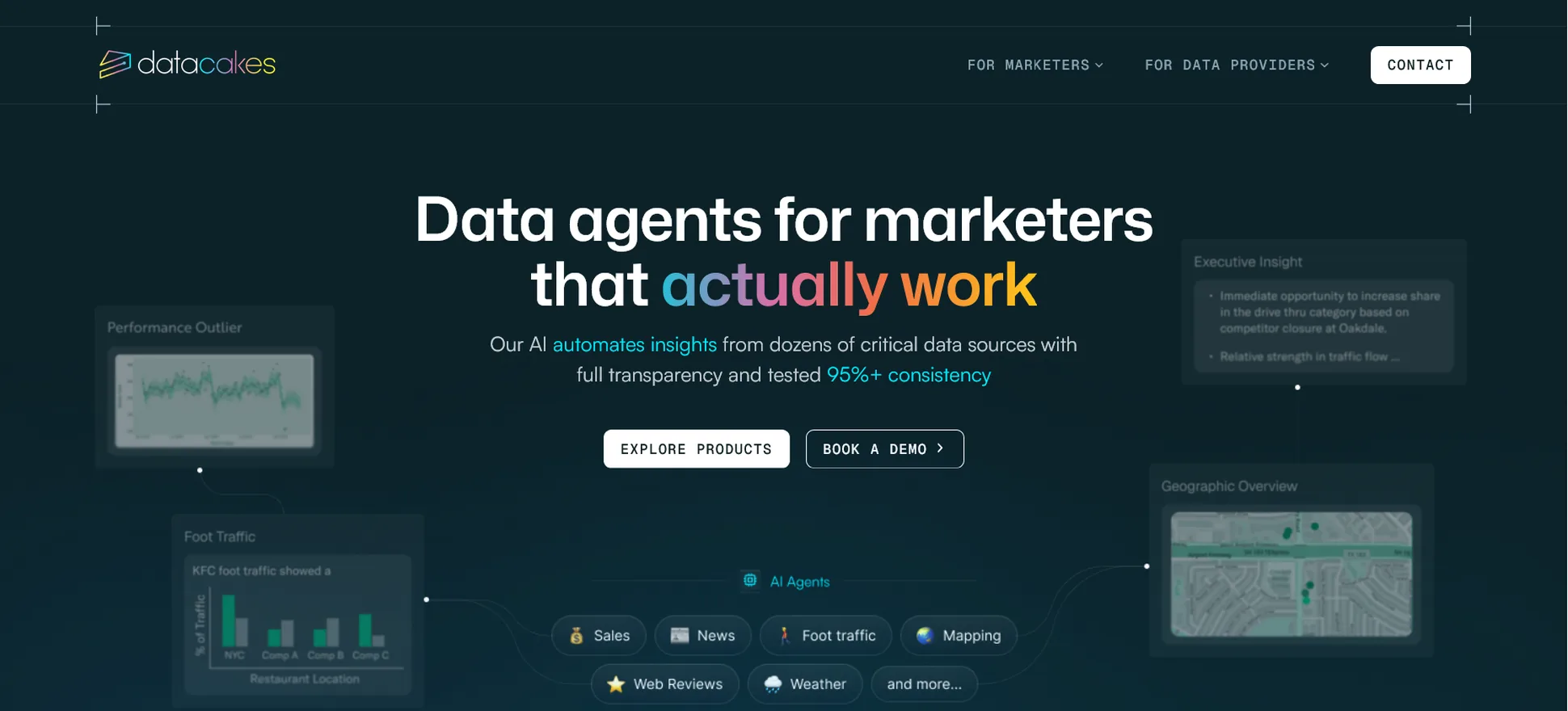
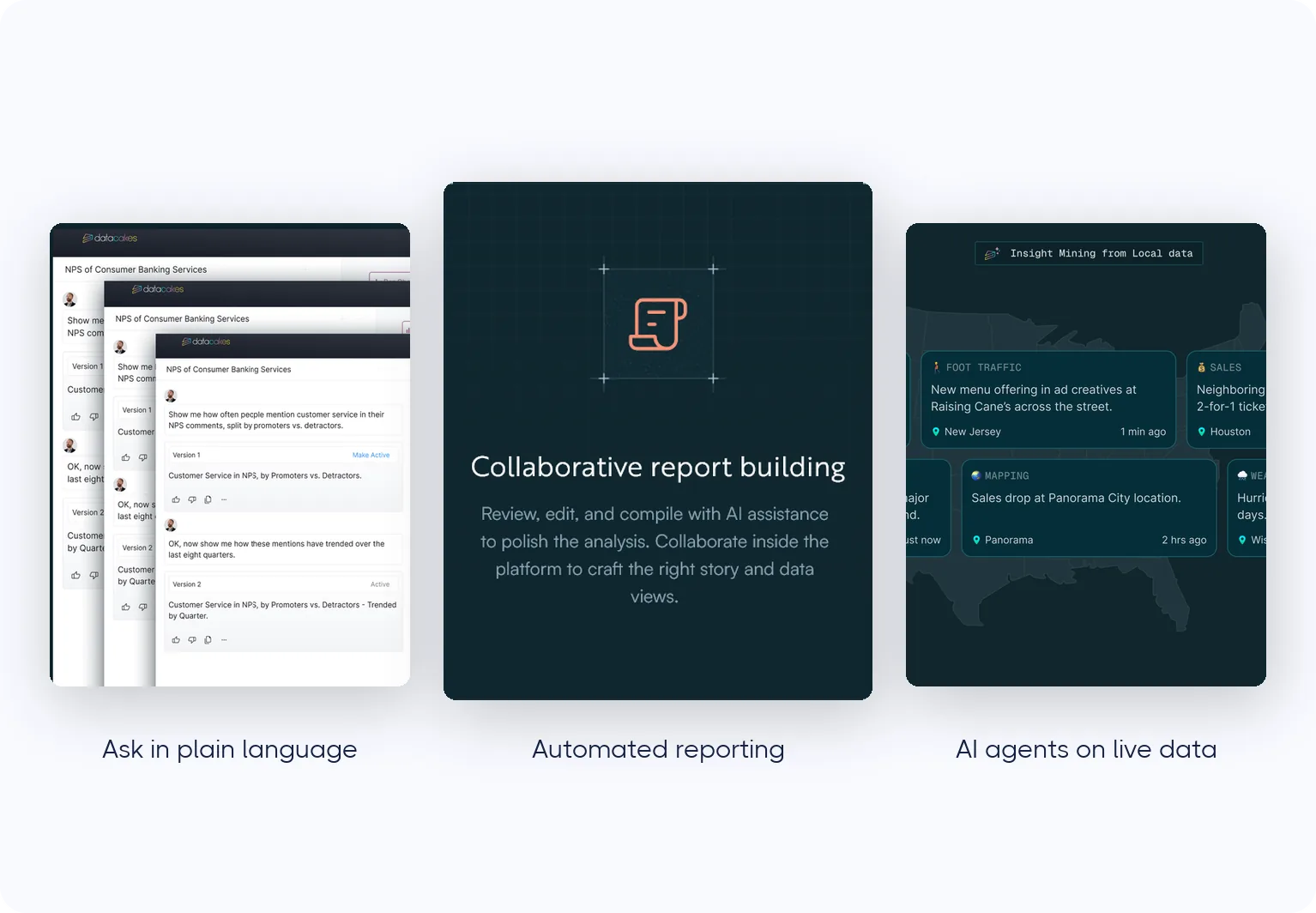
Datacakes is a venture-backed AI startup in the Aurelia Ventures portfolio that has raised $100K. It builds AI data agents for marketers. AdCake supports automated KPI reporting across ad channels, SmartCake brings local data into competitive intelligence, and Data Slicer lets clients ask questions of proprietary survey data while keeping the raw data private. For a new user, the value becomes tangible when they connect their own data and the AI turns unfamiliar tables into information they can understand.
7
Steps cut to aha
$100K
Funding raised
19%
Session time gain
Datacakes wanted new users to reach that first useful insight with less effort. Its earlier onboarding asked users to complete 9 steps before they could connect data and see the AI generate context and readable table names. The team also wanted clearer first-session visualizations and a React front end it could update quickly as the product evolved.
Datacakes' product value depended on a user seeing what its AI could do with their own data, yet 9 onboarding steps stood between sign-up and that moment. Even after connecting data, a first session needed to make the resulting insights easier to grasp. Deltacron and the Datacakes founders chose to organize onboarding around data source integration and the first useful insight, cutting the steps that did not move users toward it.






React (application front end)
Tailwind CSS (interface styling)
Chart.js (data visualization)
Figma (interface design)
Jira (project management)
GitHub (code management and review)
Deltacron led product management, UI/UX design and React front-end engineering for Datacakes, from January 2024 to March 2025. We mapped the path from sign-up to AI-generated context, made data connection the center of onboarding, brought charts into the first session, and reorganized the front end for faster iteration.
What we built
A mapped path to value: counted each step between sign-up and the moment the AI explains a user's connected data.
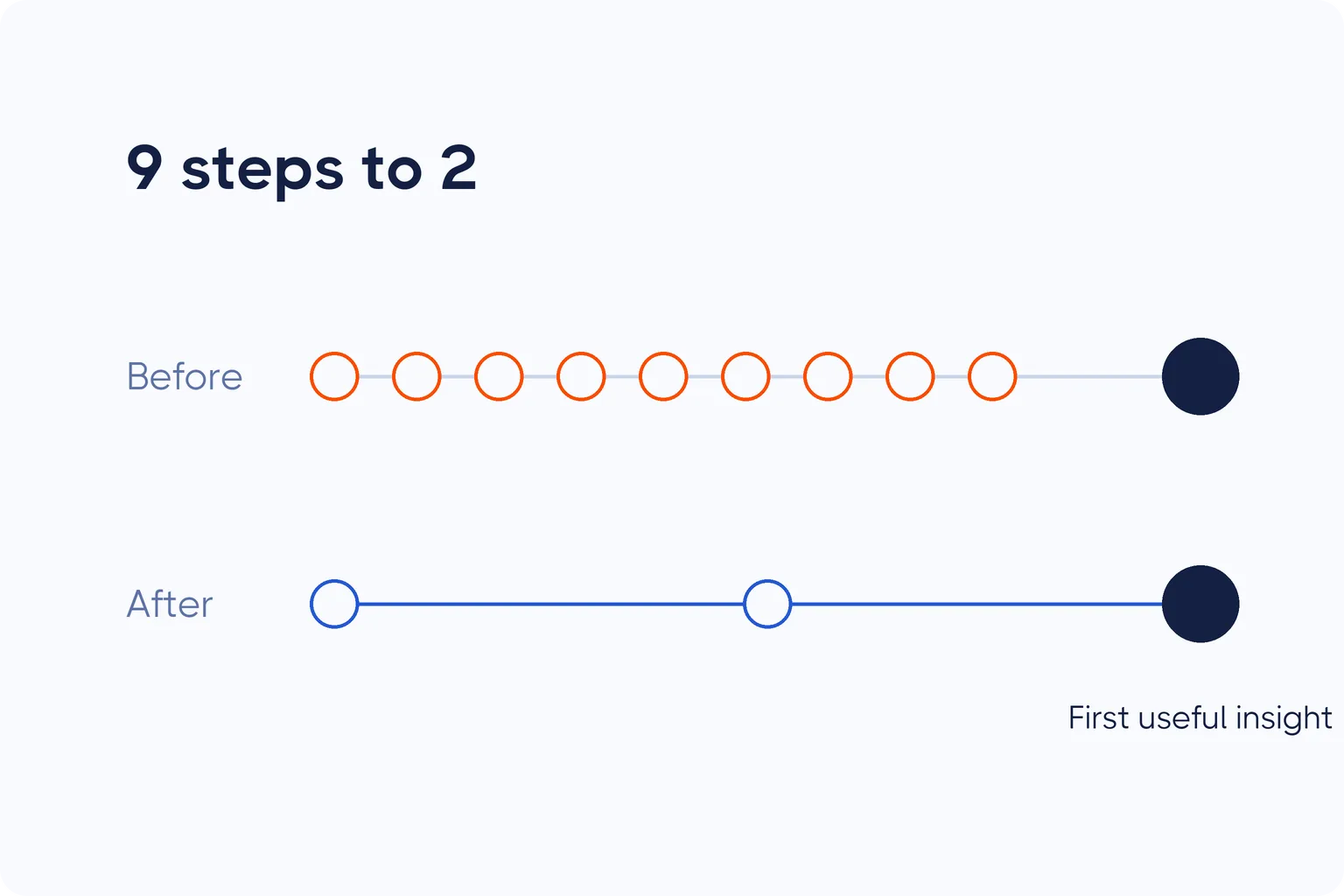
A shorter onboarding flow: removed or combined steps that did not help users reach that moment, reducing the count from 9 to 2.
Earlier data connection: put data source integration at the center of the first-use experience.
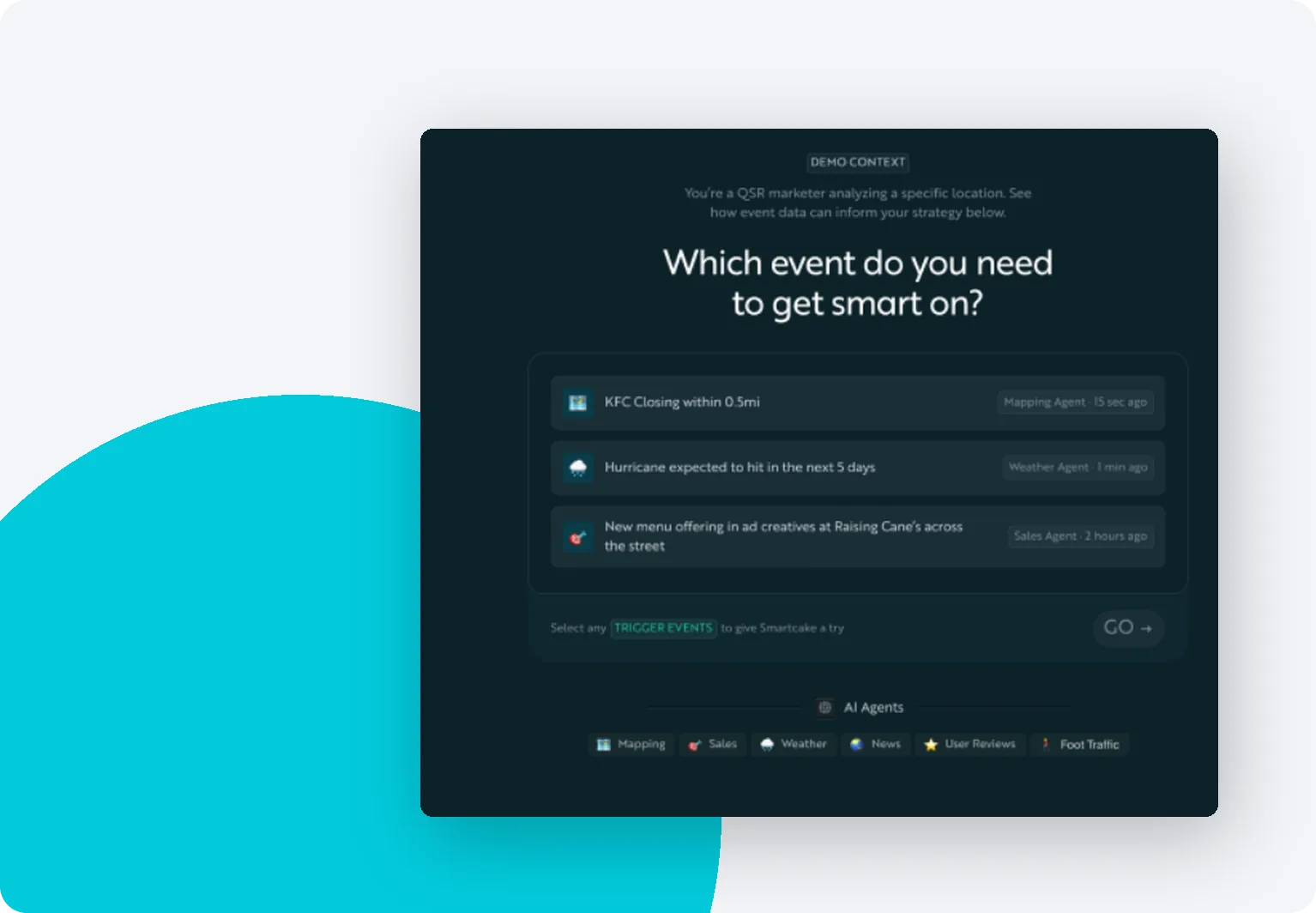
AI context during onboarding: let users see the AI generate context and readable names for raw tables as they get started.
A focused first impression: kept the flow plain so the user's own data, rather than a guided tour, demonstrates the product.
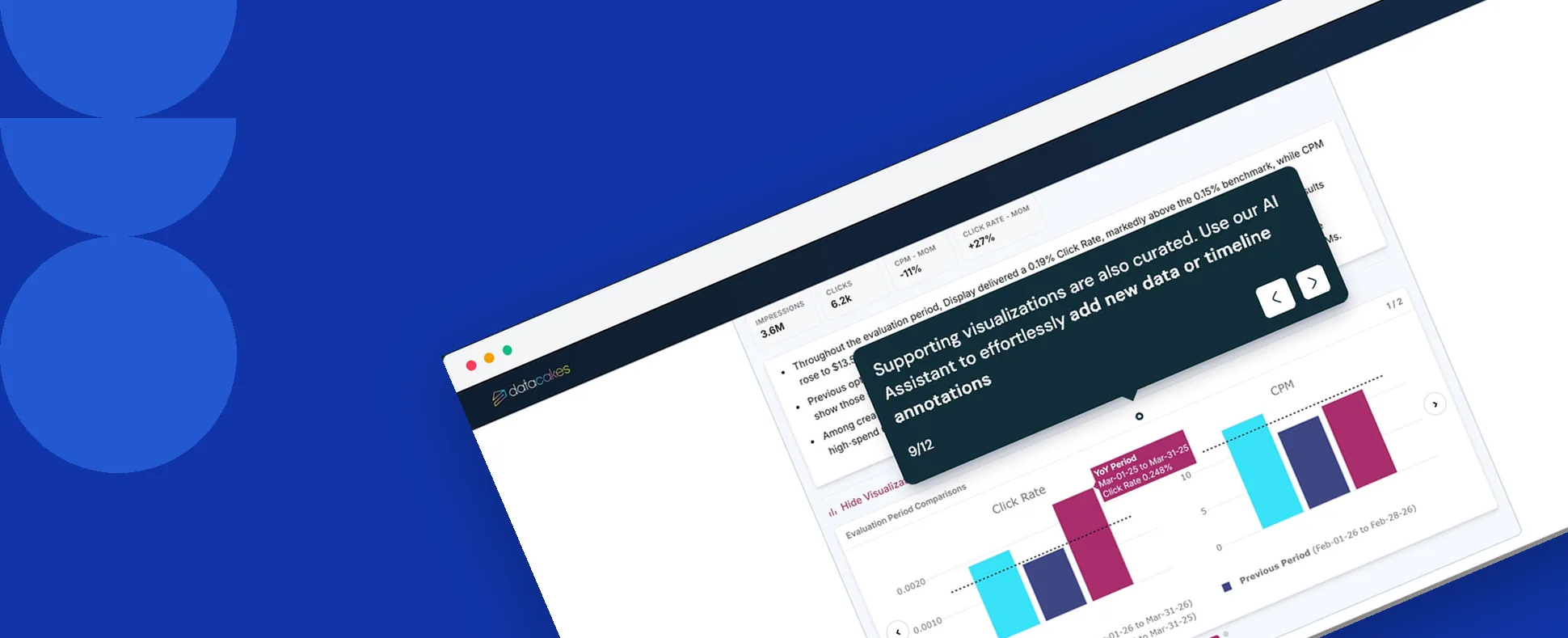
First-session charts: used Chart.js to make insights visible instead of presenting numbers alone.
React component refactoring: reorganized the front end so new features could be built and changed more easily.
Tighter code management: improved how front-end changes were reviewed and released as Datacakes continued to iterate.
The engagement ran from January 2024 to March 2025.
Define the first useful insight: identified the point where connected data becomes understandable through AI-generated context and table names.
Map and shorten onboarding: counted the steps to that point and reduced them from 9 to 2.
Make insights visual: added Chart.js visualizations to the first session.
Refactor the front end: reorganized React components and code management for faster feature work.
Release: shipped the onboarding and feature changes, then compared average session time before and after release.
An aha moment is the first point when a user sees a product solve a problem with their own information. For Datacakes, it is when a new user connects data and the AI generates context and readable names for tables that were previously hard to interpret. That definition gave the team a concrete end point for measuring the onboarding path.
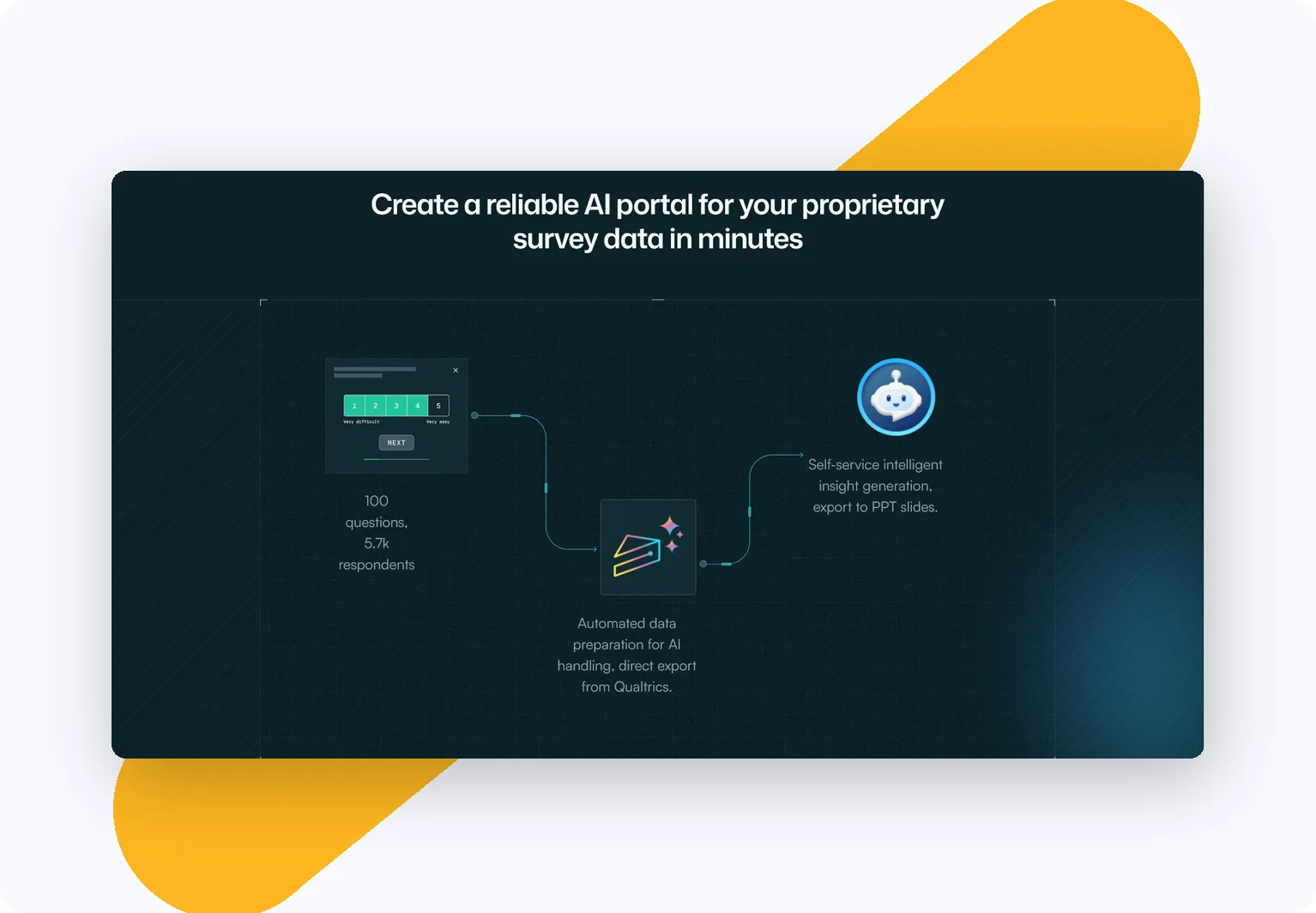
A tour can describe what an AI data product might do, but it cannot show a user what happens with their own data. Datacakes' founders chose a plain, short flow that takes users to data source integration sooner. With the user's data connected, AI-generated context and first-session charts can demonstrate the product directly.
Value came after setup. Users had to complete 9 steps before reaching the point where Datacakes could explain their connected data. We mapped that path and reduced it to 2 steps.
The first result needed to be legible. Raw tables and numbers alone did not make the insight easy to see. We brought readable table names, context and Chart.js charts closer to the first session.
The product was changing quickly. The front-end structure slowed feature work. We refactored React components and tightened code management so the team could iterate faster.
Deltacron made Datacakes' first useful insight the organizing goal for onboarding.
The path from sign-up to that insight fell from 9 steps to 2.
The first session brought AI-generated context and data visualizations closer to the user.
Average session time increased by 19% after the onboarding and feature work was released.
React component refactoring made the front end easier for the Datacakes team to change.
Datacakes gave new users a shorter route to seeing what its AI could do with their own data. The path from sign-up to the first useful insight fell from 9 steps to 2, a 78% reduction.
| Before: earlier flow | After: new flow | |
|---|---|---|
| Steps to first insight | 9 steps from sign-up | 2 steps from sign-up |
| Connected data | Raw table names | AI context and readable names |
| Average session time | Baseline session length | 19% higher after release |
| Front-end changes | Slower to ship | Refactored React components and tighter code management |
The step count measures the path from sign-up to AI-generated context and table names for connected data. The 19% figure compares average session time before and after release of the onboarding and feature work.
What did Deltacron build for Datacakes? Deltacron redesigned the onboarding flow for the Datacakes AI data SaaS, built new React features with Chart.js data visualization, and refactored the front end so the team could ship faster.
What results did the Datacakes onboarding redesign deliver? The new onboarding cut the steps to the aha moment from 9 to 2, a 78% reduction, and average session time increased by 19%.
What is the aha moment in Datacakes? It is the moment a new user connects their data sources and the Datacakes AI generates meaningful context and automatically names the raw dataset tables, turning raw data into something readable during onboarding.
What tech stack was used for Datacakes? The work was built with React, Tailwind CSS and Chart.js.
How long did the Datacakes project take? Deltacron worked with Datacakes from January 2024 to March 2025.
Does Deltacron work with early-stage AI startups? Yes. Datacakes is a venture-backed AI startup, and we help early-stage teams improve activation, ship features faster and build products that are ready to scale.
Get in Touch
Ready to help you realize your dream
Contact us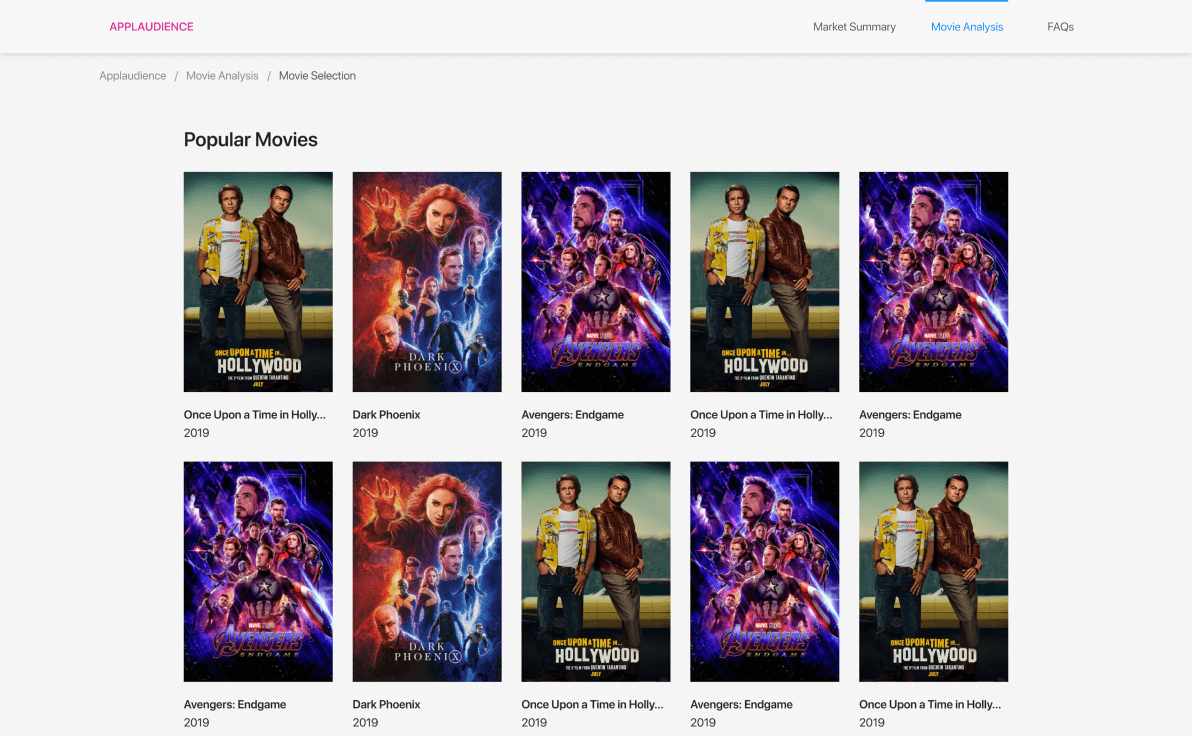
Online data analytics dashboard to track and predict movie sales behavior in real-time across multiple cinema chains.
Applaudience is an online data analytics dashboard to track and predict movie sales behavior in real time across multiple cinema chains.
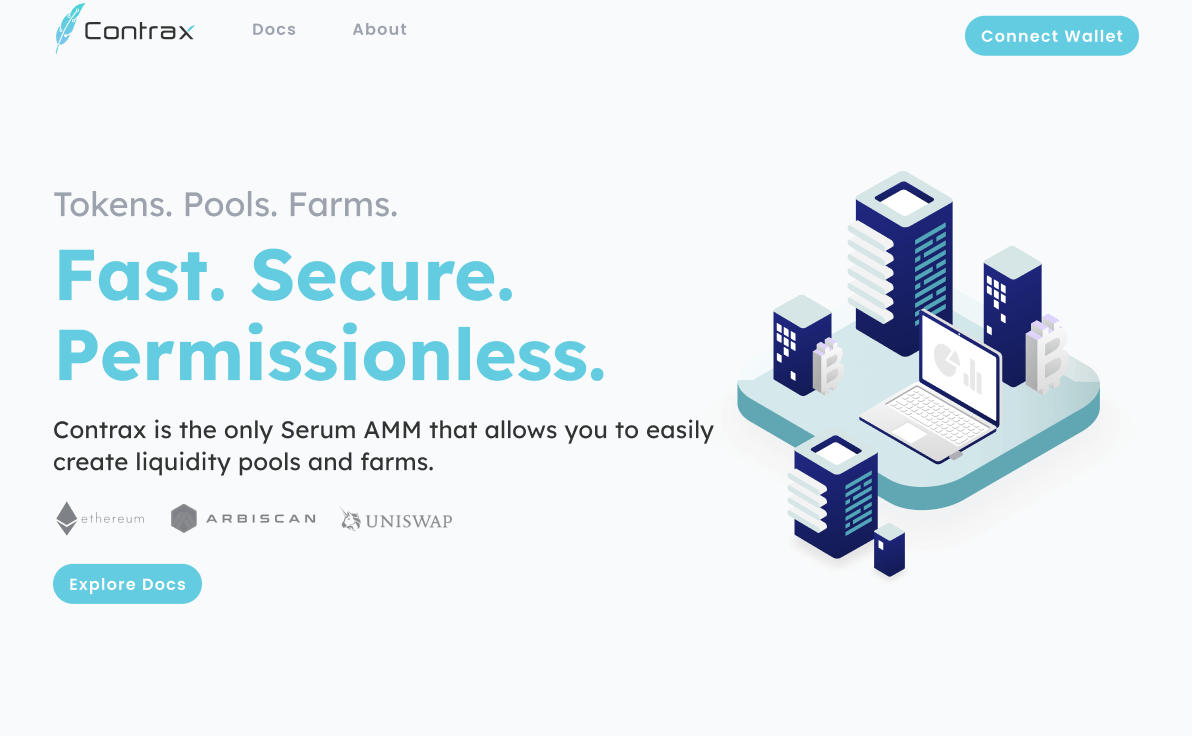
Developing open source, no-code tools and auto-compounding vaults for tangible yield assets on Ethereum and Arbitrum blockchains
A decentralized web application for people to create crypto tokens, liquidity pools, and auto-compounding farms on the Ethereum & Arbitrum blockchains.